
- Home
- Sustainability
- Environment
- Climate-Related Information Disclosures Based on TCFD Recommendations
Climate-Related Information Disclosures Based on TCFD Recommendations
Expression of Support for the TCFD
The TODA KOGYO Group views climate change as a key management issue and we engage in measures to tackle global warming to create a sustainable economic society that enables future generations to live with peace of mind.
In accordance with the framework recommended by the Task Force on Climate-related Financial Disclosures (TCFD), we disclose information on governance, strategy and risk management, and on our metrics and targets.
- Governance
-
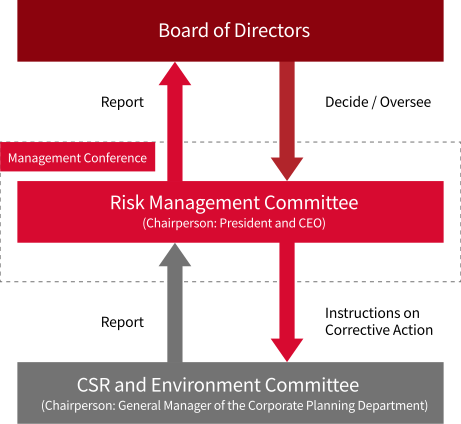
To promote and manage action on climate change companywide, we have established the CSR and Environment Committee under the Risk Management Committee (Chairperson: Representative Director, President and CEO), and work through the committee to implement oversight and management of environmental matters for the Group in Japan.
The Board of Directors confirms the status of action on climate change through reports received from the Risk Management Committee, and makes decisions and supervises the development of the necessary systems and schemes. The Department Manager of the Corporate Planning Department serves as chairperson of the CSR and Environment Committee, whose members comprise managers and personnel from business sites across the Company.
 Climate change
management system
Climate change
management system
- Strategies
-
It is anticipated that a 4 ℃ rise in global atmospheric temperature will cause irreversible and serious environmental destruction. In light of the Paris Agreement, which aims to limit the rise in global temperatures to less than 1.5 ℃, the Group has analyzed the risks and opportunities it faces under three scenarios of rising temperatures, the 1.5 ℃ scenario, 2 ℃ scenario and 4 ℃ scenario.
- 1.5℃/2℃ scenario
-
Under these scenarios, regulations and policies aimed at achieving carbon neutrality by 2050 are strengthened, around the world, action on climate change that exceeds the current status quo is implemented, and the rise in mean temperatures compared with pre-industrial levels is kept to within 1.5℃-2.0℃.
- 4℃ scenario
-
Under this scenario, action on climate change beyond the current status quo is not taken, and mean temperatures rise by around 4℃ compared with pre-industrial levels.
- IEA: International Energy Agency
- WEO: World Energy Outlook A report providing estimates on energy demand and technological development among other information.
- NZE Scenario: A net-zero emissions scenario. A scenario in which developed nations achieve net-zero emissions by rapidly increasing clean energy policies and investments.
- IPCC: Intergovernmental Panel on Climate Change
- RCP: Representative Concentration Pathway. A representative pathway for radiative forcing.
- STEPS Scenario: Existing government policy scenario. An energy system where only current policies are implemented and no new policies are introduced.
- Major business risks and opportunities (for the TODA Group)
-
Scroll
Category Type Impact on our business activities Time span Evaluation Measures Transition risks (1.5℃/2℃) Policies and legal restrictions Higher tax burden due to carbon pricing (carbon tax, emissions trading, etc.) Medium to long term Medium Technology Increased capital investment due to the switchover to low-carbonization equipment and low-carbon processes Medium to long term Medium Market Increased raw material and energy procurement costs Medium to long term Medium Reduced demand for toner due to the restricted use of copying machines and printers Medium to long term Medium Reputation Loss of reputation among customers and investors in the case of insufficient efforts in response to climate change being recognized Medium to long term Medium Physical risks (4℃) Acute Damage to buildings and equipment due to natural disasters Medium to long term Large Reduced plant utilization rates due to supply chain disruptions Medium to long term Medium Chronic Increased investments in coastal business site due to rising sea levels Long-term Large Opportunities Products and services Higher demand for plastic magnets, barium titanate and parts for wireless power supplies due to the expansion of the EV market Medium to long term Large Market Increased demand for CO₂ solid sorbent associated with expansion of the CCUS market Medium to long term Large Increasing demand for the supply of hydrogen and carbon nanotubes through the direct methane reforming process Medium to long term Medium
The TODA Group has created a climate transition plan to achieve both the continuation of business and net zero GHG emissions in 2050. This climate transition plan applies to our operations in Japan. We are planning to expand its scope to the entire TODA Group. We will also manage and update it in consideration of the advancement of decarbonization technologies, increase of related infrastructure, tightening of environmental regulations and other factors.
An overview of the plan up to 2050 is as follows.
 Roadmap of Scope1+2
greenhouse gas emissions (overview)
Roadmap of Scope1+2
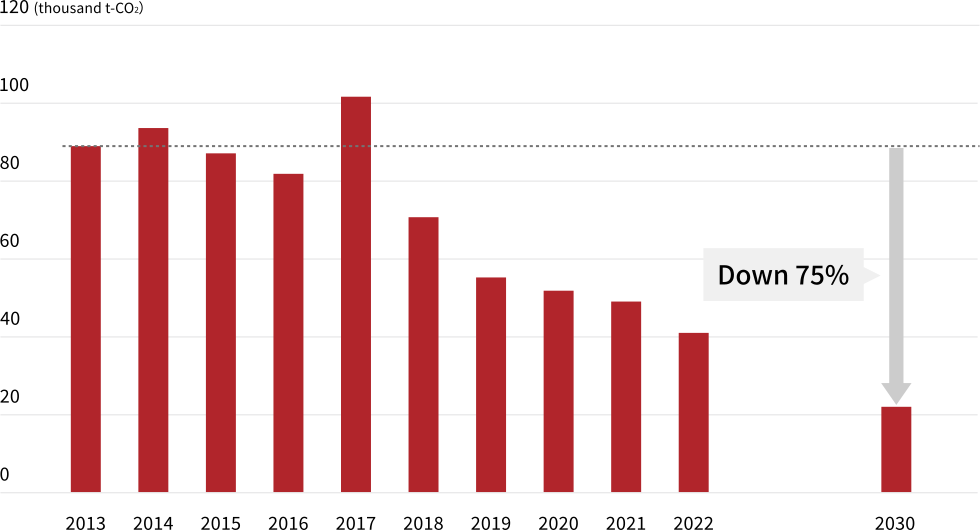
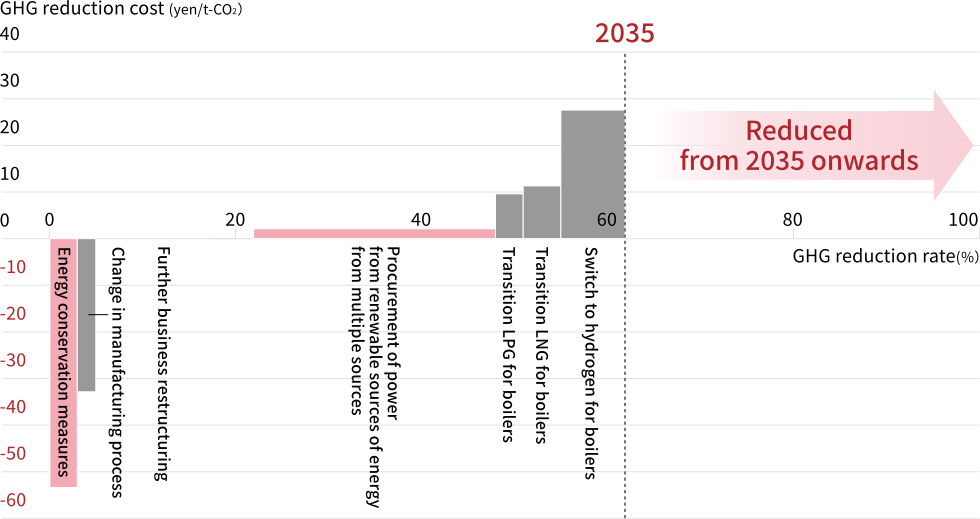
greenhouse gas emissions (overview)The Sixth Assessment Report of the Intergovernmental Panel on Climate Change (IPCC) says that it is necessary to reduce CO₂ by 65% by 2035 from the 2019 level for the purpose of controlling the temperature rise to below 1.5℃. In light of this remark, the TODA Group preferentially carry out measures with high feasibility and with high cost-effectiveness. We have made the reduction of energy consumption through business restructuring and energy-saving initiatives. We will gradually work to change the energy sources used for boilers.
Specific measures until 2035 are as follows.
 Roadmap for Scope1+2
greenhouse gas emissions (details)
Roadmap for Scope1+2
greenhouse gas emissions (details)
 Initiatives and costs for GHG
reduction until 2035 (in Japan)
Initiatives and costs for GHG
reduction until 2035 (in Japan)- Overview of investments and initiatives until 2035 (in Japan)
-
Investment plan Business transformation
Scope 1: Initial investment of approx. 1.3 billion yen
Scope2: Initial investment of approx. 0.1 billion yen
Funding plan Using not only funds on hand but also positive impact financing and other sustainable financing
- Risk management
-
The CSR and Environment Committee convenes monthly and implements its functions to oversee and manage environmental matters related to the Group in Japan, set annual targets for each business site, and manage progress through monthly activity reports from each business site. In addition, reports on climate change action are submitted to the Board of Directors twice a year through the Risk Management Committee.
- Metrics and targets
-
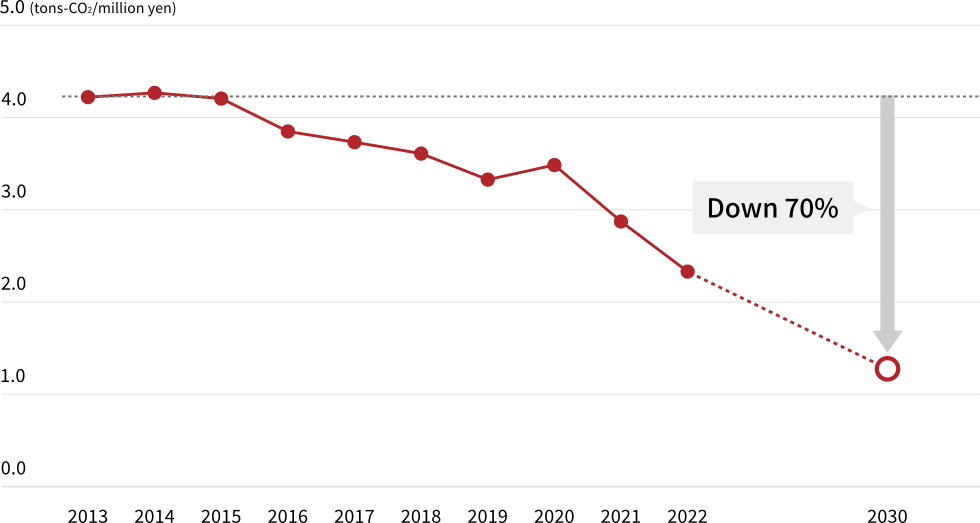
With a view toward achieving net zero greenhouse gas (GHG) emissions in 2050, we have set challenging fiscal 2030 goals for Scope1+2 GHG emissions, Scope1+2 GHG emissions per unit of sales and the use rate of renewable energy. The scope of these goals is our operations in Japan. We are planning to expand their scope to the entire TODA Group.
- 1. Scope1+2 GHG emissions: 22,000 t-CO₂ or less (a 75% reduction from the fiscal 2013 level)
- 2. GHG emissions per unit of sales: 1.3 t-CO₂/million yen or less (a 70% reduction from the fiscal 2013 level)
- 3. Use rate of renewable energy: At least 17%
- GHG emissions results in fiscal 2024 (in Japan)
-
Scroll
Indicators Results FY2030 targets Scope1+2+3 157,973 t-CO₂ - Scope1+2 32,470 t-CO₂ 22,000 t-CO₂ or less Scope1 21,535 t-CO₂ - Scope2(market-based) 10,935 t-CO₂ - Scope3 125,502 t-CO₂ - Scope1+2 emissions per unit of sales 1.9 t-CO₂/million yen 1.3 t-CO₂/million yen or less Use rate of renewable energy 29% 17% or more - Scope1+2 emissions (in Japan)
-
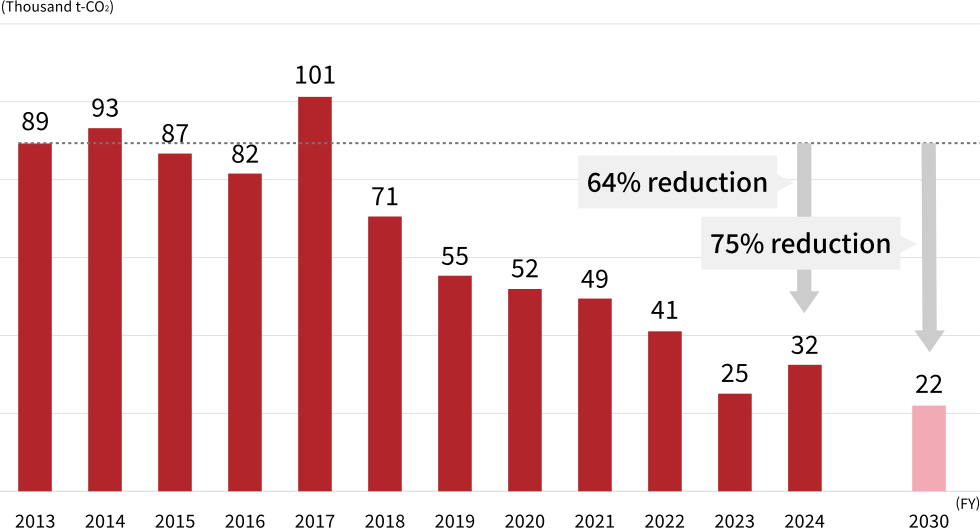
- Scope1+2 emissions per unit of sales (in Japan)
-
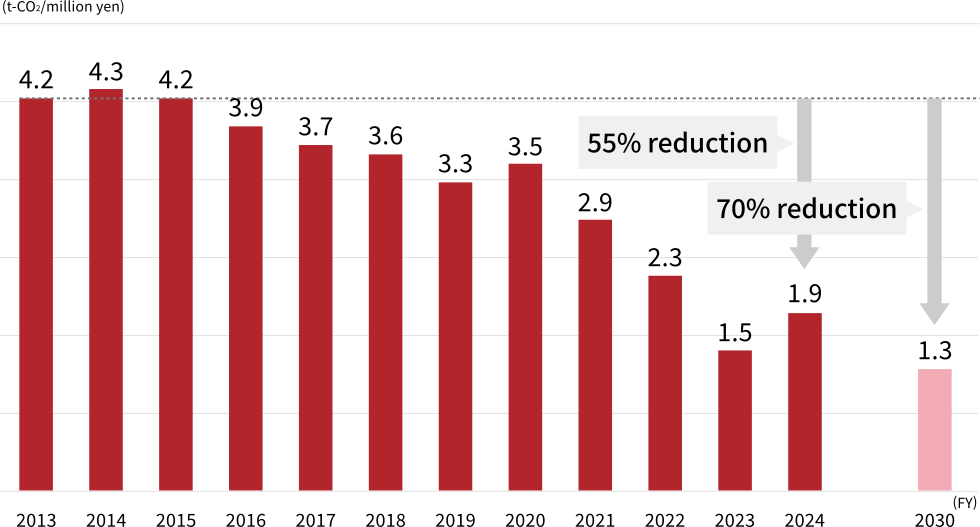
- Scope3 emissions in fiscal 2024 (in Japan)
-
Scroll
Category Items t-CO₂ Calculated sites Method for obtaining emission factor Remarks 1 Purchased products and services 96,009 TODA IDEA Ver.2.3 Expenses subject to calculation were at least the top 90% of procurement amounts TOKYO SHIKIZAI INDUSTRY 2 Capital goods 1,713 TODA Ministry of the Environment Database of Emissions Unit Values - 3 Upstream fuel procured 8,788 TODA IDEA Ver.2.3
Ministry of the Environment Database of Emissions Unit Values- TOKYO SHIKIZAI INDUSTRY 4 Transportation and distribution (Upstream) 4,833 TODA Ministry of the Environment Database of Emissions Unit Values At least the top 90% by procurement volume was subject to calculation TOKYO SHIKIZAI INDUSTRY 5 Waste generated by operations 264 TODA IDEA Ver.2.3
Ministry of the Environment Database of Emissions Unit ValuesOnly production sites were subject to calculation. TOKYO SHIKIZAI INDUSTRY 6 Business travel 231 TODA IDEA Ver.2.3
Ministry of the Environment Database of Emissions Unit Values- 7 Employee commute 215 TODA Ministry of the Environment Database of Emissions Unit Values Estimated based on the city classification, the number of employees and the number of working days TOKYO SHIKIZAI INDUSTRY Toda Fine Tech 8 Leased assets (Upstream) Not applicable - - - 9 Transportation and distribution (Downstream) 1,299 TODA Ministry of the Environment Database of Emissions Unit Values Estimated based on the emissions from business partners with high transaction volumes 10 Processing of sold products Not applicable - - - 11 Use of sold products Not applicable - - - 12 End-of-life treatment of sold products 12,150 TODA IDEA Ver.2.3
Ministry of the Environment Database of Emissions Unit Values- TOKYO SHIKIZAI INDUSTRY 13 Leased assets (Downstream) Not applicable - - - 14 Franchises Not applicable - - - 15 Investment Not applicable - - - - Other (arbitrary) Not applicable - - - Total 125,502 - - -
- Home
- Sustainability
- Environment
- Climate-Related Information Disclosures Based on TCFD Recommendations